
What can we do about it?
Facing the Billionaire Crisis

Right now we’re facing an affordability crisis. And a housing crisis. And a school funding crisis. And a voting rights crisis. And a crisis of our elections being awash in dark money. Add to this the assaults by ICE, ongoing military actions, attacks on our democracy, and crises of faith in our leaders and in the bedrock American ideal of equal opportunity for all.
While these unyielding crises have different impacts, they have two things in common. One, their consequences are deeply felt by working people across Maryland and across the country. And two, billionaires and the ultra-rich—and the obscene concentration of wealth and power in the hands of a very small number of people—are at the root.
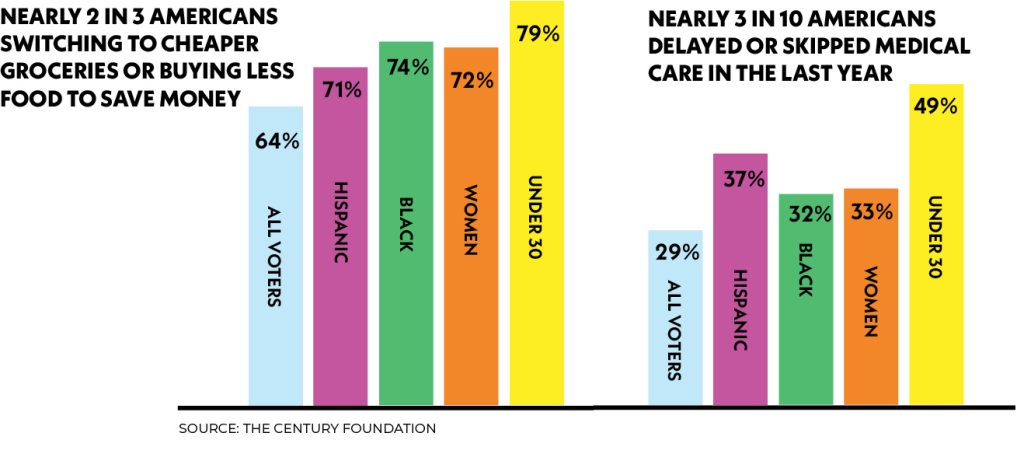

Just last month, inflation was 3.8%. For the first time in three years wages aren’t outpacing inflation. With Americans already paying more for health care, more for groceries, more for gas, and more for utilities, everyone is struggling, except the super rich.
According to Inequality.org, the 905 billionaires in the U.S. held a total $7.8 trillion in wealth as of 2025. The bottom 50% of households in America—66 million households—had $4.1 trillion. And the gap has expanded rapidly over the last few decades. Since 1989, the richest 0.1% of Americans have seen their wealth increase five times over, and the richest 1% have seen their wealth quadruple. The top 1% held nearly one-third of all wealth in the US as of 2024. At the same time, the vast majority of Americans have seen their wealth stagnate.
Trump Administration policies have made a bad problem worse. According to Americans for Tax Fairness, the net worth of U.S. billionaires increased a staggering 21.8% between January 2025, when Trump took office, and January 2026. While he was overseeing the firing of thousands of Marylanders who worked for the federal government, Elon Musk’s personal wealth grew 73.1%.
“Wealth is concentrated among a handful of people, and it’s harder for the average American to afford their groceries, housing, car payments, and medical bills,” said MSEA President Paul Lemle. “We see those im-pacts add up to food insecurity, increased stress, and in some cases home-lessness among our students.”
Wealth isn’t going to workers to afford basic necessities, it isn’t going to local governments to fund public schools and services—it’s going to a small number of super-wealthy individuals who reinvest that money into our elections to support politicians who won’t tax them, into union-busting firms to prevent workers from having a voice, and into yachts, vacation homes, and trips to outer space.
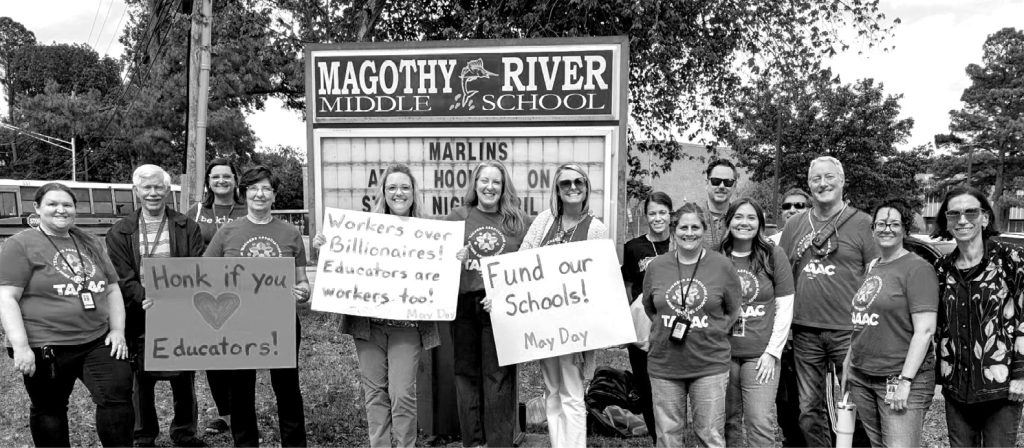
Since 2010, when the Supreme Court ruled in the Citizens United case, ruling that corporations and other groups could spend unlimited money on elections up and down the ballot, super PACs (made up of donations from the wealthiest donors) have flourished. Super PACs now flood billions and billions of dollars into state and national elections. According to Forbes, super PACs spent $6.4 billion on federal elections from 2010–2022; in 2024 alone, that tallied to $2.7 billion.
“Inequality is incredibly frustrating and creates an unhealthy society. How do we fight back? Through working people standing together and using our overwhelming numbers to show that the power belongs with the people, not with the billionaires who are looking out for themselves and their bank accounts,” said Lemle.
May Day: Celebrating Human Dignity
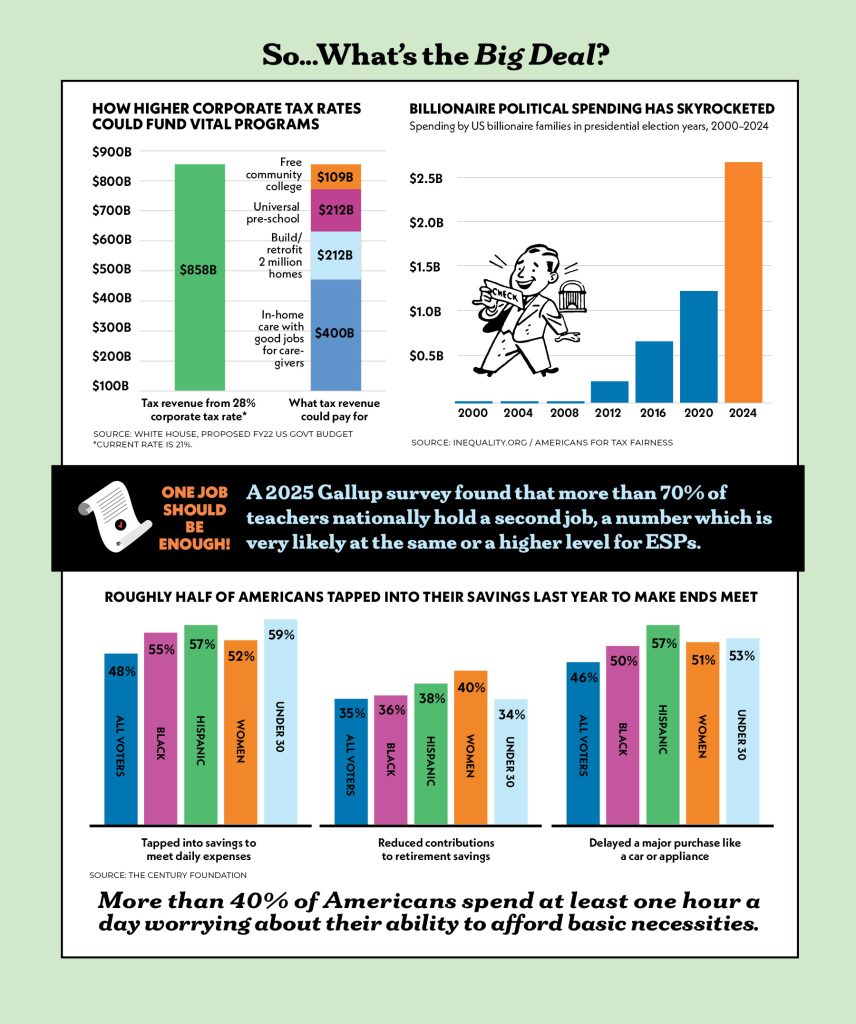
Workers over billionaires—it’s the straightforward slogan of the May Day Strong coalition, a network of hundreds of organizations across the country that have put together thousands of May Day actions in support of working people.
May Day is also known as International Workers’ Day, and for more than a century has been a day for workers around the world to come together to advocate for fairness, respect, and dignity.
In Chicago, a traditional union stronghold, the first US May Day action came on May, 1, 1886 when workers demanded an end to the grueling 10- and 12-hour shifts six days a week in a general strike joined by tens of thousands of Chicago workers. It took years, but it was the actions of Chicago’s unionized workers that finally won the eight-hour day in 1918 with a rallying cry of “Eight hours for work, eight hours for rest, and eight hours for what you will.” Now, in a renewed activist environment, workers are organizing unions across industries, education, and commercial retail, and once again fighting for basic rights and dignity against an unleashed oligarchy.
Across the country May Day Strong events, like those throughout Maryland, highlight the need to:
• Stop the billionaire takeover of our government
• Fully fund public schools, healthcare, and housing for all
• Protect and defend social programs like Medicaid and Social Security
• Stop the attacks on immigrants, people of color, Native people, people with disabilities, and LGBTQ+ people
Several local unions in Maryland organized around May Day Strong this year, including the Teachers Association of Anne Arundel County (TAAAC). In 2025, 18 schools participated in May Day actions—this year TAAAC members organized in 36 schools. Many schools organized walk outs at the end of the duty day to show their unity, willingness to speak up, and support for the full funding of educator salaries and position increases in the county. TAAAC engaged community groups and parents to stand with educators in support of schools and workers across the county and the country.
For the Montgomery County Education Association (MCEA), May Day turned into May Days as over the course of several weeks county educators wrote thousands of postcards, sent thousands of emails, and engaged in rallies and visibility actions at schools and out-side the County Council with the goal of securing full funding for the MCPS budget, including fighting to prevent staff layoffs.
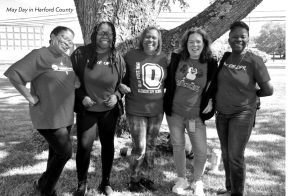
In Harford County, the Harford County Education Association organized school walk outs at the end of the school day to protest the $15 million shortfall in the county executive’s budget proposal and the impact that it would have on schools and students.
“Two dozen schools across the county held walk-ins connected to our May Day advocacy,” said Teachers Association of Baltimore County President Kelly Olds. “It was a great way to build awareness of worker power and the importance of solidarity and grassroots organizing.”
And in St. Mary’s County, an NEA May Day Grant helped to support months of community-building work that led to more than 100 people from a wide range of labor unions turning out on May Day to stand together in support of public education. “Our May Day rally was bigger than we could have dreamed because the word spread around that the educators were rallying, and people showed up in force to support our efforts,” said Education Association of St. Mary’s County President Sarah Penrod.
Fighting for Public Education Funding
Contracts broken. School board budgets underfunded—sometimes by tens of millions of dollars. It’s happened across Maryland, from the state’s largest counties and school systems to some of the smallest.
Why? Again, look to the billionaires and the ultra-rich. In this case, they are not paying their fair share in taxes to support the public services we all depend on. A 2025 paper published by the National Bureau of Economic Research found that billionaires were paying an average effective tax rate of 24%—compared to a 30% average effective tax rate for all other U.S. taxpayers.
That’s the case because the US taxes work and wealth differently. Most working people get a regular paycheck and pay state and income taxes on that income. But the more wealthy you are, the more likely you are to have a significant proportion of your monthly income derived from stocks and bonds. Those are taxed when they’re sold, and they are taxed at a lower rate than the income tax rate. For most of us, that tax loophole is out of reach.
Additionally, if you’re one of the ultra-rich who does receive a typical paycheck, the current system benefits you. The state’s income tax is administered in a progressive manner, meaning that those who earn more have a higher income tax rate than those who make less. And while county governments have the ability to implement a progressive tax structure for their local income taxes, only three have so far. In most counties there is one flat local income tax rate, which is regressive. This means that the ultra-rich’s local tax bill will be a lower share of their income than it is for most workers.
County governments in Maryland could make the system fairer by implementing a progressive system—lowering the tax rate for working people and increasing it for the ultra-rich—and still increase the overall revenue coming into the county to pay for things like public schools. That is what a more just society looks like.
This matters for school funding because when the rich aren’t paying their fair share—when people who spend their day in front of a classroom are paying higher taxes than people who spend their day on a yacht—that means there’s less and less money available to
fund public services, including public schools.
“MSEA and our locals have fought hard at the state and local levels for progressive tax revenue—meaning that the wealthy pay more than those of us who are just getting by,” said Lemle. “The bottom line is this: our society is better served when every school is fully funded than when every billionaire has a private jet.”
The Struggle for the Rest of Us: Affordability
Rising grocery and housing costs, spiraling energy bills, and ever-increasing gas prices…it all adds up to an affordability crisis for educators—and so many Americans—no matter where they live.
In Maryland, educator pay raises—driven by state investments from the Blueprint for Maryland’s Future—have pushed earnings for Maryland educators to among the highest in the country. According to NEA’s 2026 Educator Pay Report, Maryland teachers have the 6th highest average starting salary in the country and 7th highest average salary, and Maryland ESP have the 11th highest average earnings.
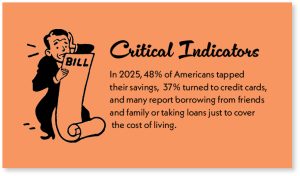
That’s good news—but when you adjust for inflation over the last decade, it’s clear that pay has not kept up. Zooming out to the national level, adjusted for inflation, teachers earn about 5% less and ESPs 8% less than they did 10 years ago in terms of the purchasing power of their salaries.
And while Maryland’s higher salaries help to buck those trends somewhat, it’s still hard to get by—let alone get ahead. A 2025 Gallup survey found that more than 70% of teachers nationally hold a second job, a number which is very likely at the same or a higher level for ESPs as well. “It’s a vicious cycle,” said MSEA President Paul Lemle. “Not feeling like we can afford to get by or get ahead leads educators to take second jobs, which can lead to greater burnout and turnover. That makes it harder to fully staff our schools and attract people to our profession.”
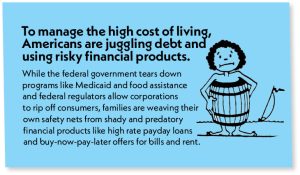
“The relentless rise in the cost of living, particularly for essentials like groceries, gas, and healthcare, has forced significant adjustments in my household and those of many I know,” said Anthony Janey, a special education paraeducator in Baltimore County. “This means carefully scrutinizing every expense, delaying crucial home repairs, pushing back major purchases like vehicles, and foregoing even modest treats that used to be part of a balanced life. It’s no longer about saving for the future for many, but about ensuring the present remains manageable, often through families taking on extra work hours or making difficult compromises on quality of life.”
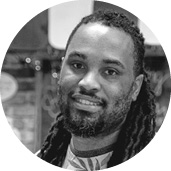
The impact of the affordability crisis isn’t just on educators—but on students and their families as well. “The demand for our school food banks has surged, and we see more families reaching out for assistance with clothing, especially for seasonal items like winter coats,” said Janey. “There’s also a growing need for hygiene products and an increased number of inquiries about healthcare-related resources. This growing dependency highlights the expanding role schools are being asked to play—not just as educational institutions, but as critical community hubs providing essential social services. The strain on our existing resources and staff is considerable, underscoring the urgent need for broader systemic support to address the fundamental economic pressures many working families are facing.”