

Documentary to Feature MSEA’s 168-Year History
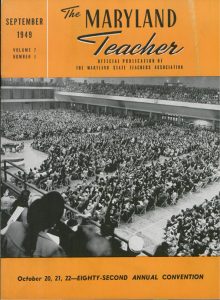
Delegates at the 2025 MSEA Convention and Representative Assembly passed a new business item requesting a longform video about MSEA’s 168-year history that will debut this summer. MSEA dug deep into its archive to find moving and unexpected print and photographic records for the documentary and interviewed members whose reflections illustrate the power, diversity, and activism of our union.
“Our members and our history are filled with incredible stories,” said MSEA President Paul Lemle. “Knowing that Maryland educators and our union engaged with and positively impacted some of the most important moments in our history is nothing new to us. The progress, the contradictions, the sometimes messy work of union members like us over decades is fascinating and humbling.”
The video will trace MSEA’s history from its inception—when 27 educators gathered at Western Female High School in Baltimore on December 27, 1865—to today. We’ll see the same themes come up over and over again through the years—education funding and educator pay, efforts to gain active community support, and social, racial, and economic justice.
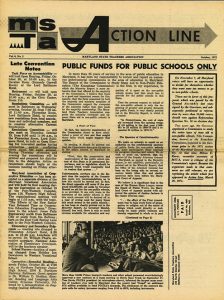
The guidance given to educators at the first annual meeting of MSEA (then MSTA—the Maryland State Teachers Association) by the first Maryland State Superintendent, Libertus Van Bokkelen, still resonates: “Bring school legislation out of the region of theory and into that of substantive fact.” Today, just as Van Bokkelen recommended years ago, members attend local board of education and county council meetings, or visit the State House in Annapolis, to tell their personal classroom and worksite stories so legislators get a true picture of exactly what it takes to serve public education in their community.
“The project grapples with who be-longs, who leads, and who our collective union voice represents,” said MSEA Vice President Nikki Woodward. “We see members struggle with that through the long effort to integrate MSTA with the Maryland Educational Association, the Black teachers union, the inclusion of education support professionals, and how we best work in solidarity with parents and community members.
“There’s a lot to learn from, a lot to be proud of, and a lot to demonstrate how the work we do today stands on the shoulders of so many who came before us,” Woodward added.