

3 Questions
Gina Miller, Montgomery County English Teacher
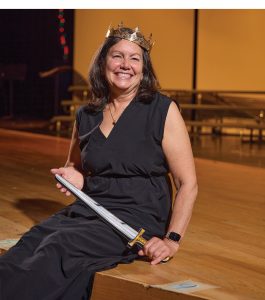
Clarksburg High School English teacher Gina Miller understands how kids learn. Her English class field trips bring to life Shakespeare’s timeless themes and familiar complicated relationships.
You received a $5,000 NEA Foundation grant to take 150 ninth-grade students to a live production of Romeo and Juliet. How was the application process and timeline?
I began investigating grants in early 2025. We received a smaller grant to support the field trip the previous year but wanted to remove barriers to participation by reducing the cost even more. The NEA Foundation’s Student Success grant was a good fit and the application process was detailed, but not grueling. I made sure I was in compliance with district requirements, but the majority of the work was in creating my written proposal. I tried to provide a picture of my students and their needs and communicate the relevance of the play to their learning. Our application was submitted in early September, and we received notice of our award less than three months later, so it was a fairly streamlined process compared with many other grant programs.
You took the students to see Romeo and Juliet first, then read the play. How did that help students connect to the characters, language, and universal themes of the written word?
Already knowing what happens frees students to analyze more deeply and think more critically. Often, Shakespeare is taught by having students read first, then watching a live performance or filmed adaptation. We flipped the script by seeing the play first with minimal pre-teaching, then read the play. We realized that providing students with the context of the story is key to supporting their understanding of Shakespearean language. Understanding the full character arc of the key players helps students focus more on the beauty of Shakespeare’s writing and the overarching themes of the play as they read the text. Before reading, I described the Globe Theatre so students could picture the setting as it would have been experienced by theater-goers in Shakespeare’s time. I reviewed the characters and invited students to participate in a Shakespearean insult battle, complete with foam swords. They could try out unfamiliar language in a low-stakes environment with peer support, including cheering and giggling.
Your school has a very diverse student body. How were you able to help students find relevance in deeply embedded Western European history and the traditions of Shakespeare’s work?
There is value in studying Shakespeare, but at the same time I recognize that his relevance has been questioned as we shift the focus to diverse authors and texts in which our students can genuinely see themselves reflected. One reason we chose the Chesapeake Shakespeare Company’s performance for our students is their mission of creating vibrant and delightful experiences. The company is an extremely diverse group of talented actors with a true gift for authentically captivating teenage audiences. Before and after the show, the actors engage with students through joking with them, providing opportunities for Q&A, inviting students to take selfies with favorite characters, and even calling two students onstage during the pre-show. All of this provided our students with a culturally relevant and resonant experience that carried through to the reading of the play back in our classroom. When students have a front-row seat to the tragic story, they can’t help but be invested in the text.