
From Unity to Action: Building a Future Rooted in Equity and Belonging
Racial Social Justice Summit 2026
Racial Social Justice Summit
Join us for the 2026 MSEA Racial Social Justice Summit.
This year’s theme reminds us that unity is more than shared values; it is about shared responsibility. Equity and belonging require an intentional commitment in our decisions, our practices, and the experiences we create for students, families, and one another across our schools and communities.
The summit will be a day of powerful conversations and interactive sessions designed to equip educators and community leaders with the tools to drive meaningful change. Expect sessions that center on building belonging, fostering collective action, and the shared struggles that unite us.
This conference is for MSEA members only. If you are not yet a member and wish to become one, please complete the MSEA membership application form at this link. Sign it, follow form instructions, and forward a copy to [email protected] with subject line RSJS.
Questions: [email protected]
Keynote Speaker
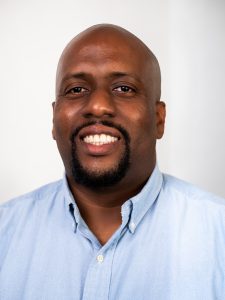
José Luis Vilson is a sociologist, educator, and author in New York City, NY. He graduated with a doctoral degree in sociology and education with a policy concentration from Teachers College, Columbia University. He is the executive director and co-founder of EduColor, an organization dedicated to building and supporting communities of educators of color. He currently works as a postdoctoral research associate at Bank Street College of Education and as an adjunct associate professor at Teachers College, Columbia University.
He wrote the best-selling book This Is Not A Test: A New Narrative on Race, Class, and Education, and has written for multiple publications, including The New York Times, The Guardian, and The Atlantic. He speaks about education, math, and race for a number of organizations, including TED, American Education Research Association, National Council of Teachers of Mathematics, and National Council of Teachers of English. He serves on the board of directors for the National Board of Professional Teaching Standards and PowerMyLearning. He is also a special advisor for Teachers Unify against Gun Violence. In 2025, he was named a New America Fellow.
He is currently working on two other publications, including You Already Know: Teaching Students Math from The Knowledge Within through Heinemann Books. He co-authored the book Teaching 2030: What We Must Do For Our Students and Public Schools… Now and In The Future with Dr. Barnett Berry and 11 other accomplished teachers, and profiled in two other books: Teacherpreneurs (Berry, Byrd, Weider; 2013) and Teaching with Heart (Scribner, Intrator; 2014).
He was named one of GOOD Inc.’s GOOD100 in 2013 of leaders changing their worlds and an Aspen Ideas Scholar in 2013. His blog, TheJoseVilson.com, was named one of the top 25 Education Blogs by Scholastic, Education World, and University of Southern California Rossier School of Education’s Teach 100.
Agenda
8:30 a.m.: Registration & Breakfast
9:00 a.m.: Welcome and Opening Remarks
9:15 a.m.: Keynote Speaker and Q&A
10:30 a.m.: Workshop Session I
12:00 p.m.: Lunch
1:30 p.m.: Workshop Session II
3:10 p.m.: Closing and Call to Action
Workshop Agenda and Descriptions
Morning Workshop Session (10:30 a.m.- 12:00 p.m.)
Safe Havens: Supporting Immigrant Students and Families in Our Schools
Facilitated by Toni Mejias and Dionna Ricks
Location: Concourse C
This workshop empowers educators, ESPs, and school staff with the knowledge, tools, and mindset needed to create truly welcoming and supportive environments for immigrant students and their families. Participants will explore the unique challenges immigrant communities face, develop culturally responsive strategies, and learn how to advocate for safe, inclusive school practices. Together, we will build pathways that honor language, culture, identity, and the strengths immigrant families bring into our schools.
Mutual Aid is Mutual Respect
Facilitated by Jennifer Sell
Location: Concourse D
What is mutual aid? How does it differ from charity or supporting non-profit work? How has mutual aid been used in the past to support the working class in their struggle against white supremacy and the billionaire class? How can I begin to build a mutual aid network in my own community? Come learn the answers to these and other questions.
The Black History Project
Facilitated by Kate Ehrlich and students from Oakdale High School
Location: Heathrow
Student volunteers from Oakdale High School and their advisor will present information about the Black History Project. For the past three years, students have researched and found innovative ways to share local Black history with members of the community. The group has produced a traveling exhibit about Frederick’s Black history and hosted an all-day walking tour of Cambridge, Maryland, for Frederick County Public School staff. This spring, students released a podcast about a historic case from 1920s Frederick. Educators will learn how to incorporate similar learning experiences into their own classes.
Effective Advocacy for ESP Equitable Pay Through Data-Driven Proposals
Facilitated by Sam Walters and Sonia D’Urbano
Location: Coal Harbor
This session will inform and empower pay equity advocates on how they can use gold-standard research data to effectively make the case for what a fair, realistic living wage should be for ESPs across Maryland. It will demonstrate how wage sufficiency data and salary scales can be used to prove the existence of gross inequities in ESP salaries and the ways in which these inequities are maintained and exacerbated by widely used salary calculation practices and negotiation tactics often relied upon during local contract negotiations. Participants will leave with a better understanding of more effective wage and salary calculations geared towards reducing—and eventually reversing— our current salary inequities and moving ESPs closer to professional wages and long-term economic mobility.
Using Literature to Bridge Differences
Facilitated by Dr. Kelli Hickey and Capathia Campbell
Location: Santos Durant
In this session, educators will learn how to intentionally integrate diverse texts into instruction to support conversations around identity, equity, and social justice in developmentally appropriate ways. It will demonstrate how children’s books, middle‑grade novels, and young adult literature can be used to highlight multiple perspectives, challenge stereotypes, and connect students to both familiar and unfamiliar experiences.
Participants will explore a framework for selecting culturally authentic texts, analyze sample passages and lessons, and practice discussion protocols that encourage student voice while maintaining a safe and supportive learning environment. They will also examine how literature can strengthen social-emotional learning by helping students reflect on their own identities, recognize bias, and build empathy.
This interactive, resource-rich workshop is designed for K-12 educators who are committed to creating learning spaces where every student feels respected, represented, and empowered.
Afternoon Workshop Session (1:30 p.m.- 3:00 p.m.)
Immigrants are Welcome Here: Creating Safe Schools and Communities
Facilitated by Amber Myren
Location: Concourse C
Participants will be empowered to create safe spaces for our immigrant communities through analyzing the current school protocols, discussing their own populations, assessing local assets and needs, and examining case studies of what is working in local schools. Educators will leave the session with a draft plan for creating or adding to a collaborative Immigrant Support Committee in their schools and communities. Participants will be presented with up-to-date data from local partners in immigration advocacy and mutual aid. Participants will feel empowered to be better-educated advocates for the immigrant students, families, and leaders in their schools.
The Leader as Host: Building Inclusive Union Structures with Equity Leadership
Facilitated by Dr. Tony Martinet
Location: Concourse D
Unity arises from shared responsibility, yet traditional “Hero” leadership models often stifle collective power. To achieve racial, social, and economic justice, union leaders must undergo an “inside-out” transformation. This workshop introduces the National Equity Project’s Leading for Equity (LFE) Framework, shifting the leadership stance from “driving” to “hosting.” Regardless of your association role, you will learn to manage the internal “urge to fix” and to build structures that center members with marginalized lived experiences. Attendees will be able to actively reflect on their own leadership skills and begin to build their toolbox of skills to become an equity leader.
Understanding Structural Racism in Schools: From History to Present-Day Practice
Facilitated by Amber Austin
Location: Heathrow
This interactive session examines how policies, discipline systems, and curriculum have been shaped by racialized systems that continue to produce inequitable outcomes for our students. Grounded in the scholarship of Kimberlé Crenshaw, Michelle Alexander, and Zaretta Hammond, participants will engage in deep analysis of short anchor texts to explore how structural racism operates in ways that appear neutral yet create predictable disparities. Educators will reflect on their own institutional contexts, confront implicit assumptions, and examine how culturally unsafe environments impact students’ learning. They will leave with concrete, culturally responsive, brain-aligned strategies and an actionable classroom equity audit tool to begin disrupting inequitable patterns in their own practice.
Advocating within Professional Boundaries: Working Within the System to Create Change
Facilitated by Yuneca Deas and Felecia Wesley
Location: Coal Harbor
Sustainable advocacy happens inside systems, not outside of them. This session focuses on using committees, leadership teams, school improvement plans, and data to influence change effectively and professionally.
The NeuroSEL Method™: How Safety Drives Equity, Belonging, and Learning
Facilitated by Dr. Yvette Thomasson
Location: Santos Dumont
Equity initiatives often falter, not because educators lack commitment, but because chronic stress and nervous system overload limit our capacity to engage in difficult conversations, sustain empathy, and respond effectively to student needs.
This interactive session introduces the NeuroSEL Method™, a neuroscience-informed framework that integrates social-emotional learning with an understanding of how safety and regulation shape behavior, relationships, and learning. Participants will explore how stress responses influence bias, communication, classroom management, and conflict, and why psychological and physiological safety are foundational to equitable practice.
They will learn practical, classroom-ready strategies to regulate themselves and co-regulate with students, de-escalate challenging situations while preserving dignity, and foster environments where all learners feel safe to engage.
Participants will leave with concrete tools they can implement immediately to support belonging, reduce burnout, strengthen relationships, and sustain equity work over time.
This session is designed for educators, support staff, and leaders seeking actionable strategies to move from shared values to daily practices that build truly inclusive school communities.