Welcome

2026 Racial Social Justice Summit

This year’s theme reminds us that unity is more than shared values; it is about shared responsibility. Equity and belonging require an intentional commitment in our decisions, our practices, and the experiences we create for students, families, and one another across our schools and communities.

The summit will be a day of powerful conversations and interactive sessions designed to equip educators and community leaders with the tools to drive meaningful change. Expect sessions that center on building belonging, fostering collective action, and the shared struggles that unite us.

This conference is for MSEA members only. If you are not yet a member and wish to become one, please complete the MSEA membership application form at this link. Sign it, follow form instructions, and forward a copy to [email protected] with subject line RSJS.

Questions: [email protected]

Agenda Overview 

8:30 a.m. Registration & Continental Breakfast 

9:00 a.m. Welcome and Opening Remarks

9:15 a.m. Keynote Speaker and Q&A 

10:30 a.m. Workshop Session I 

12:15 p.m. Lunch  

1:30 p.m. Workshop Session II 

3:00 p.m. Afternoon Break/Transition to Closing Session

3:10 p.m. Closing Remarks & Call to Action

Keynote Speaker

Meet our keynote speaker.
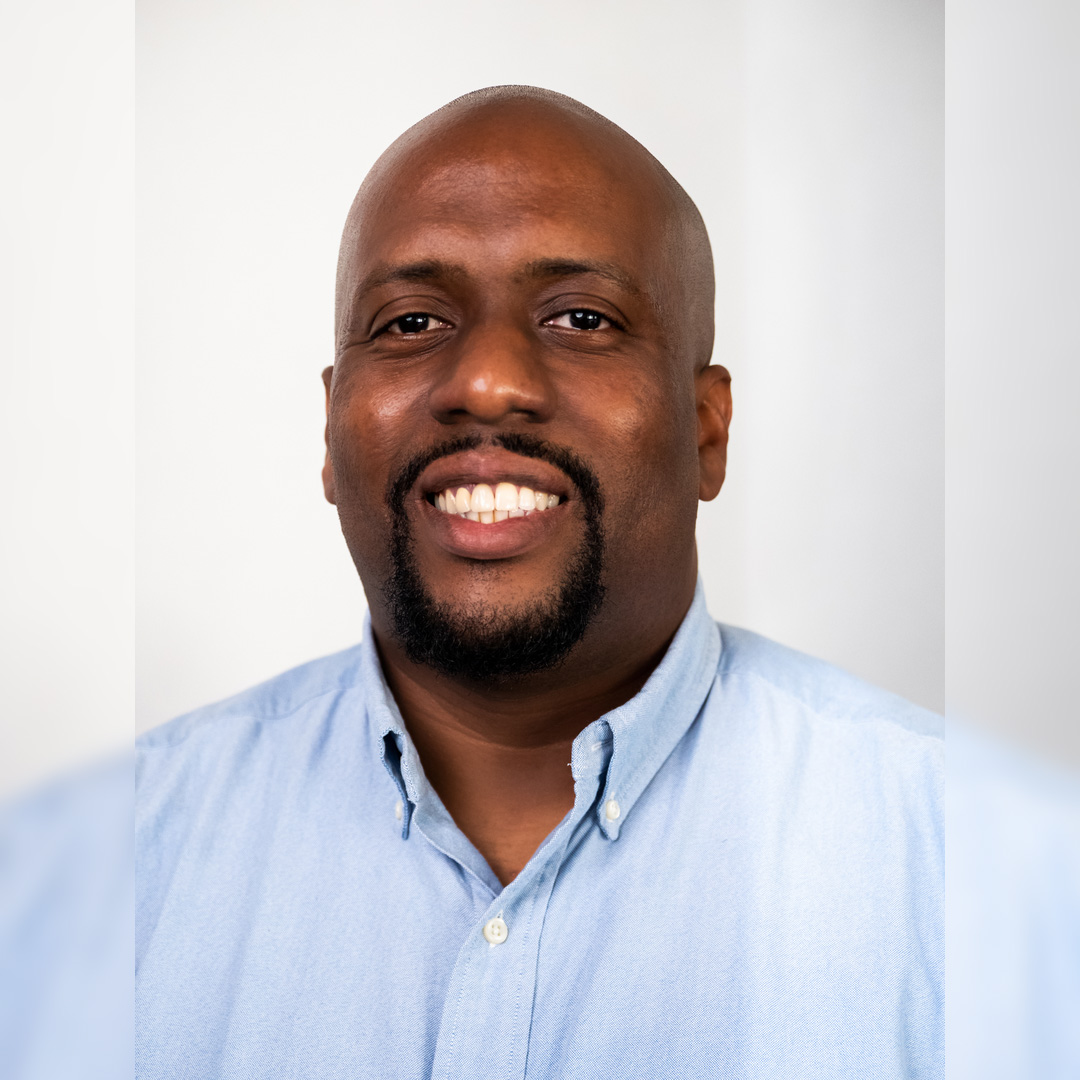
Dr. José Luis Vilson

Sociologist, Educator and Author

Dr. José Luis Vilson

He/Him

José Luis Vilson is a sociologist, educator, and author in New York City, NY. He graduated with a doctoral degree in sociology and education with a policy concentration from Teachers College, Columbia University. He is the executive director and co-founder of EduColor, an organization dedicated to building and supporting communities of educators of color. He currently works as a postdoctoral research associate at Bank Street College of Education and as an adjunct associate professor at Teachers College, Columbia University.

He wrote the best-selling book This Is Not A Test: A New Narrative on Race, Class, and Education, and has written for multiple publications, including The New York Times, The Guardian, and The Atlantic. He speaks about education, math, and race for a number of organizations, including TED, American Education Research Association, National Council of Teachers of Mathematics, and National Council of Teachers of English. He serves on the board of directors for the National Board of Professional Teaching Standards and PowerMyLearning. He is also a special advisor for Teachers Unify against Gun Violence. In 2025, he was named a New America Fellow.

He is currently working on two other publications, including You Already Know: Teaching Students Math from The Knowledge Within through Heinemann Books. He co-authored the book Teaching 2030: What We Must Do For Our Students and Public Schools… Now and In The Future with Dr. Barnett Berry and 11 other accomplished teachers, and profiled in two other books: Teacherpreneurs (Berry, Byrd, Weider; 2013) and Teaching with Heart (Scribner, Intrator; 2014).

He was named one of GOOD Inc.’s GOOD100 in 2013 of leaders changing their worlds and an Aspen Ideas Scholar in 2013. His blog, TheJoseVilson.com, was named one of the top 25 Education Blogs by Scholastic, Education World, and University of Southern California Rossier School of Education’s Teach 100.

Event Program

Explore our diverse range of sessions across the summit.

Saturday, May 16

8:30 am

Registration & Continental Breakfast

Thurgood Marshall Ballroom Pre-Function Space

Registration

9:00 am

Welcome

Thurgood Marshall Ballroom A/B

Welcome & Opening Remarks

Thurgood Marshall Ballroom A/B

Honoring the Ancestors, the Elders, the History, and the Land

Thurgood Marshall Ballroom A/B

Introduction of Keynote Speaker: Dr. José Luis Vilson

9:15 am

Keynote Presentation

Thurgood Marshall Ballroom A/B

Keynote Presentation and Q&A

10:20 am

Break/Transition to Workshop Session 1

10:30 am

Workshop Session I

Concourse C

Safe Havens: Supporting Immigrant Students and Families in Our Schools

Concourse D

Mutual Aid is Mutual Respect

Heathrow

The Black History Project

Santos Dumont

The Leader as Host: Building Inclusive Union Structures with Equity Leadership

Coal Harbor

Effective Advocacy for ESP Equitable Pay Through Data-Driven Proposals

12:15 pm

Lunch

12:45 pm

Highlights from the Field

1:30 pm

Workshop Session II

Concourse C

Immigrants Are Welcome Here: Creating Safe Schools and Communities

Heathrow

Make the Effort: Lessons I’m Still Learning

Concourse D

Using Literature to Bridge Differences

Coal Harbor

POWER: What is it? Why do we want it?

Santos Dumont

The NeuroSEL Method™: How Safety Drives Equity, Belonging, and Learning

3:00 pm

Break/Transition to Closing Session

3:10 pm

Closing Remarks & Call to Action

Welcome & Opening Remarks


Presenters

Co-Chair, MSEA Human and Civil Rights Committee

Kierre Vinson

MSEA President

Paul Lemle

Honoring the Ancestors, the Elders, the History, and the Land


Presenters

Co-Chair, MSEA Human and Civil Rights Committee

Jorge Córdoba

Chair, MSEA Women's Concerns Committee

Dr. Lindsey Beck

Introduction of Keynote Speaker: Dr. José Luis Vilson


Presenters

MSEA President

Paul Lemle

Keynote Presentation and Q&A


Presenters

Sociologist, Educator and Author

Dr. José Luis Vilson

Dr. José Luis Vilson is a sociologist, educator, and author in New York City, NY. He graduated with a doctoral degree in sociology and education with a policy concentration from Teachers College, Columbia University. He is the executive director and co-founder of EduColor, an organization dedicated to building and supporting communities of educators of color. He currently works as a postdoctoral research associate at Bank Street College of Education and as an adjunct associate professor at Teachers College, Columbia University.

He wrote the best-selling book This Is Not A Test: A New Narrative on Race, Class, and Education, and has written for multiple publications, including The New York Times, The Guardian, and The Atlantic. He speaks about education, math, and race for a number of organizations, including TED, American Education Research Association, National Council of Teachers of Mathematics, and National Council of Teachers of English. He serves on the board of directors for the National Board of Professional Teaching Standards and PowerMyLearning. He is also a special advisor for Teachers Unify against Gun Violence. In 2025, he was named a New America Fellow.

He is currently working on two other publications, including You Already Know: Teaching Students Math from The Knowledge Within through Heinemann Books. He co-authored the book Teaching 2030: What We Must Do For Our Students and Public Schools… Now and In The Future with Dr. Barnett Berry and 11 other accomplished teachers, and profiled in two other books: Teacherpreneurs (Berry, Byrd, Weider; 2013) and Teaching with Heart (Scribner, Intrator; 2014).

He was named one of GOOD Inc.’s GOOD100 in 2013 of leaders changing their worlds and an Aspen Ideas Scholar in 2013. His blog, TheJoseVilson.com, was named one of the top 25 Education Blogs by Scholastic, Education World, and University of Southern California Rossier School of Education’s Teach 100.

Safe Havens: Supporting Immigrant Students and Families in Our Schools


This workshop empowers educators, ESPs, and school staff with the knowledge, tools, and mindset needed to create truly welcoming and supportive environments for immigrant students and their families. Participants will explore the unique challenges immigrant communities face, develop culturally responsive strategies, and learn how to advocate for safe, inclusive school practices. Together, we will build pathways that honor language, culture, identity, and the strengths immigrant families bring into our schools.

Presenters

Administrative Secretary, Office of Equity, Diversity & Belonging, Prince George's County Public Schools

Toni Mejias

Toni Mejias is an education leader with Prince George’s County Public Schools, where she strengthens onboarding and professional development systems. She also serves as a union advocate, championing equitable practices and empowering education professionals to thrive.

English Language Development (ELD) Teacher, Jackson Road Elementary School, Montgomery County Public Schools

Dionna Ricks

Dionna Ricks is an English Language Development (ELD) Teacher in Montgomery County, Maryland with 30+ years of experience. She is a lifelong learner and social justice advocate who is actively involved in all levels of OUR Association.

Mutual Aid is Mutual Respect


What is mutual aid? How does it differ from charity or supporting non-profit work? How has mutual aid been used in the past to support the working class in their struggle against white supremacy and the billionaire class? How can I begin to build a mutual aid network in my own community? Come learn the answers to these and other questions.

Presenters

7th Grade Science Teacher, Annapolis Middle School (Anne Arundel County Public Schools)

Jennifer Sell

Jennifer Sell (she/her) is a member of the Teachers Association of Anne Arundel County (TAAAC). She is a co-lead for the TAAAC Member Organizing Committee and is the Immigration Lead for TAAAC. She teachers middle school science within Anne Arundel County Public Schools (AACPS).

The Black History Project


Kate Ehrlich and student volunteers from Oakdale High School will present information about the Black History Project. For the past three years, students have researched and found innovative ways to share local Black history with members of the community. The group has produced a traveling exhibit about Frederick’s Black history and hosted an all-day walking tour of Cambridge, Maryland for Frederick County Public School staff. This spring, students released a podcast about a historic case from 1920s Frederick. Educators will learn how to incorporate similar learning experiences into their own classes.

Presenters

Social Studies and History Teacher, Oakdale High School, Frederick County Public Schools

Kate Ehrlich

Kate Ehrlich is a high school history and social studies teacher in Maryland’s Frederick County public schools. In 2024, she was named social studies teacher of the year by the Maryland Council for the Social Studies. She has held National Board Certification since 2011.

The Leader as Host: Building Inclusive Union Structures with Equity Leadership


Unity arises from shared responsibility, yet traditional “Hero” leadership models often stifle collective power. To achieve racial, social, and economic justice, union leaders must undergo an “inside-out” transformation. This workshop introduces the National Equity Project’s Leading for Equity (LFE) Framework, shifting the leadership stance from “driving” to “hosting.” Regardless of your association role, you will learn to manage the internal “urge to fix” and to build structures that center members with marginalized lived experiences. Attendees will be able to actively reflect on their own leadership skills and begin to build their toolbox of skills to become an equity leader.

Presenters

English Teacher, Crossland High School, Prince George's County Public Schools

Dr. Tony Martinet

Dr. Tony Martinet is a high school English Teacher in Prince George’s County. He currently serves as a member of the MSEA Board of Directors, a Zone 1 Co-Director for the NEA LGBTQ+ Caucus, and the leadership coach for the PGCEA SPARKS program. Through these experiences, he has continually worked to create spaces of equity and opportunity that enable members to exercise their own power for change and advocacy. He has been selected to present at the NEA Leadership Summit for the past 5 years on topics of organizing, communication, and leadership development.

Effective Advocacy for ESP Equitable Pay Through Data-Driven Proposals


This session will inform and empower pay equity advocates on how they can use gold-standard research data to effectively make the case for what a fair, realistic living wage should be for ESPs across Maryland. It will demonstrate how wage sufficiency data and salary scales can be used to prove the existence of gross inequities in ESP salaries and the ways in which these inequities are maintained and exacerbated by widely used salary calculation practices and negotiation tactics often relied upon during local contract negotiations. Participants will leave with a better understanding of more effective wage and salary calculations geared towards reducing—and eventually reversing— our current salary inequities and moving ESPs closer to professional wages and long-term economic mobility.

Presenters

Science Assistant, Wilde Lake High School, Howard County Public Schools

Sam Walters

Sam Walters is a sociologist and lawyer with years of advocacy experience in litigation driven by data analysis.

Technical Assistant, Teacher and Paraprofessional Development, Howard County Public Schools

Sonia D’Urbano

Sonia D’Urbano is an Education Support Professional(ESP) currently working for the Howard County Public School System. She started her career with the school system as a Teachers’ Secretary advancing to Principal’s Secretary and then to the position she currently holds as a Technical Assistant for the Department of Teacher and Paraprofessional Development at Central Office. Sonia is also an HCPSS Interpreter where she works directly with Spanish speaking students and families. Sonia started her union work in NYC where she worked in publicly funded day care and served on the Latino Committee and as building representative with DC 37 and Local 205 for 12 years.

Sonia serves as co-chair of the Organizing Committee for HowardCEA and as Board Liaison for the MSEA ESP Organizing Committee. Sonia has served on the negations team in her County and has presented at the State and National Levels at various conferences.


Presenters

Eastern Technical High School (Baltimore County)

Brian Losinger and Rabin Bhandari

Young Immigrants of America School Supplies Project

Pokomoke High School (Worcester County)

Cassandra Whitaker

The Rainbow Masquerade

Northwestern High School (Prince George’s County)

Dr. Keila Foster

The El Sol Bookmobile Project

Member, MSEA Human and Civil Rights Committee

Carol Mowen (Moderator)

Immigrants Are Welcome Here: Creating Safe Schools and Communities


Participants will be empowered to create safe spaces for our immigrant communities through analyzing the current school protocols, discussing their own populations, assessing local assets and needs, and examining case studies of what is working in local schools. Educators will leave the session with a draft plan for creating or adding to a collaborative Immigrant Support Committee in their schools and communities. Participants will be presented with up-to-date data from local partners in immigration advocacy and mutual aid. Participants will feel empowered to be better-educated advocates for the immigrant students, families, and leaders in their schools.

Presenters

Amber Myren

Amber Myren is a high school EML history teacher, who has been in the classroom for 10 years now! She has led multiple professional development sessions on assisting immigrants learning english in all types of classrooms and finding success in school and beyond! She is proud of her union ties and all they have done to support and keep safe our Maryland communities.

Montgomery County Immigrant Rights Collective

Jess Cruz Serrano

Make the Effort: Lessons I’m Still Learning


MSEA President Paul Lemle will create a training in racial/social justice advocacy work intended for privileged audiences. This session is a preview of the first iteration; participants are requested to provide feedback and suggestions to be incorporated before the training is launched.

Presenters

MSEA President (Howard County)

Paul Lemle

Paul Lemle was enjoying a fun (but not lucrative) career as a professional musician when he was diagnosed with lymphoma at age 29. After this experience, he returned to Louisiana State University for a graduate degree in education with incarcerated youth. He moved to Maryland in 2003 when his wife began working for the federal government; they have an adoptive family of three boys. Paul is a teacher of American Government and Law in Howard County Public Schools, and served his colleagues as Howard County Education Association president from 2011-17.

Using Literature to Bridge Differences


In this session, educators will learn how to intentionally integrate diverse texts into instruction to support conversations around identity, equity, and social justice in developmentally appropriate ways. It will demonstrate how children’s books, middle‑grade novels, and young adult literature can be used to highlight multiple perspectives, challenge stereotypes, and connect students to both familiar and unfamiliar experiences.

Participants will explore a framework for selecting culturally authentic texts, analyze sample passages and lessons, and practice discussion protocols that encourage student voice while maintaining a safe and supportive learning environment. They will also examine how literature can strengthen social-emotional learning by helping students reflect on their own identities, recognize bias, and build empathy.

This interactive, resource-rich workshop is designed for K-12 educators who are committed to creating learning spaces where every student feels respected, represented, and empowered.

Presenters

Library Media Specialist, Hebbville Elementary School, Baltimore County Public Schools

Capathia Campbell

Capathia P. Campbell is a dedicated Media Specialist with Baltimore County Public Schools, where she has served for over 20 years. A lifelong advocate for educators and equity, Capathia has been speaking up for others since childhood. Growing up in Queens Village, New York City, as a product of school integration and the daughter of migrant parents from the South, she learned early the value of education, perseverance, and using her voice to uplift others.

Capathia earned her undergraduate degree from Central Connecticut State University and her Master’s in Library Science from Atlanta University. She began her professional career at the Enoch Pratt Free Library, where she was mentored by trailblazing women of color, including Dr. Carla Hayden, who reinforced the importance of equitable access to library services for all children.
During the global pandemic, Capathia became a proud graduate of the Maryland State Education Association’s Minority Leadership and Women’s Leadership Training Program (MLTP/WLTP), strengthening her commitment to mentoring and developing future leaders.

With more than two decades of service, Capathia has demonstrated leadership at the local, state, and national levels. Currently, she is serving in her second term as TABCO Board Member for District I, is Co-Chair of the Minority Affairs Committee, Co-Chair of the MSEA Election Committee, and Liaison to the CIC Workgroup. She has also served as a Delegate to the NEA Representative Assembly for over five years and to the State Representative Assembly for more than ten years, and has mentored participants in MLTP/WLTP.

Capathia believes every child deserves access to diverse books, strong encouragement, and educators who reflect and remain committed to their communities. She also believes educators deserve strong unions that support and empower them. Her passion remains rooted in a simple mission: reach back, lift others, and ensure every student and educator has the opportunity to thrive.

4th Grade Teacher, Stoneleigh Elementary School, Baltimore County Public Schools

Dr. Kelli Hickey

Dr. Kelli Hickey is an experienced educator with over 20 years’ experience with Baltimore County Public Schools (BCPS). She served as the Building Representative for the Teacher’s Association of Baltimore County (TABCO) for over a decade at her home school. Currently, she is a member of TABCO’s Board of Directors as the District II Representative.

Dr. Hickey earned her Doctor of Philosophy degree in Instructional Leadership for Changing Populations with distinction from Notre Dame of Maryland. Out of 11,000 applicants, the American Educational Research Association (AERA) selected Dr. Hickey to present her dissertation research at their annual conference. Additionally, as a liaison for Discovery Education, Dr. Hickey had the honor of attending a teacher appreciation reception at the White House in 2024, where she joined a select group of educators of color from Maryland, Virginia, and the District of Columbia.

In 2014, Dr. Hickey founded Mindset Matters, offering interactive workshops that promote the implementation of brain-centered techniques that support student achievement and engagement. Dr. Hickey enjoys traveling nationwide, training adults and students on developing a growth mindset.

POWER: What is it? Why do we want it?


Presenters

Math Teacher, Tuscarora High School, Frederick County Public Schools

Dr. Lindsey Beck

Dr. Lindsey Beck is an educator with a unique journey across multiple sectors and grade levels, beginning with child development studies at Whittier College and a graduate fellowship at the Broadoaks School of Whittier College as a lead preschool teacher. Seeking to understand education through a policy lens, Dr. Beck earned a Master’s in Public Policy from Georgetown University, focusing on family, education, and social policy, and worked for a decade as a Legislative Assistant for Congressman Dale Kildee (Michigan), an educator and advocate himself. Missing teaching, Dr. Beck returned to the classroom—first in upper elementary, then discovering a true calling in high school mathematics. Dr. Beck holds a Master’s in Mathematics Education from Hood College and a Doctorate in Education from Nova Southeastern University.

UniServ Director, Prince George’s County Educators’ Association

Stephanie Walters

The NeuroSEL Method™: How Safety Drives Equity, Belonging, and Learning


Presenters

Professional School Counselor, Dr. Henry A. Wise, Jr. High School, Prince George’s County Public Schools

Dr. Yvette Thomasson

Dr. Yvette Thomasson, LCPC, is a veteran school counselor, licensed therapist, educator, and founder of Foremind LLC, a behavioral wellness and social-emotional learning organization. With nearly 30 years of experience serving diverse school communities, she specializes in trauma-informed practices, educator well-being, and strategies that promote equity, belonging, and student success. Dr. Thomasson developed the NeuroSEL Method™, a neuroscience-informed framework that integrates social-emotional learning with nervous system regulation to support sustainable change in schools. She is committed to helping educators create safe, inclusive environments where both students and staff can thrive.


Presenters


Presenters

Co-Chair, MSEA Human and Civil Rights Committee

Jorge Córdoba

Venue

Hilton Baltimore BWI Hilton
1739 W. Nursery Rd., Linthicum Heights, MD 21090


Free Parking – DO NOT PAY FOR PARKING

Back to Top